Tracie Howe Photography – Seattle Wedding Photographer | Seattle elopement photographer | Destination wedding and elopement photographer | Pacific Northwest wedding and elopement photographer | Family and lifestyle photographer | Travel photographer based in Seattle. » Seattle destination wedding and travel photographer. Specializing in documentary and candid photography for adventurous souls wanting a destination wedding or elopement. I love working with mountain-climbing, sea-loving, travel-wanderlusting free-spirits, and I hope you will contact me for your next adventure!

Masthead header


Tuesday’s Tip #7:

Understand that shooting in different lighting will affect the color of your photos. Light from the sun has a different color temperature (about 6000K) than fluorescent light (about 4500K). You should be aware of what lighting you are shooting under, because it is important for choosing a white balance (WB) setting on your camera. Choosing the wrong white balance can dramatically affect the color temperature of your photo. Ever get a really red, icky colored shot when shooting indoors? It’s because you have the wrong white balance set. I finally have a visual for you Tuesday Tip learners!

white balance camera setting examplepinimage

Keep in mind, that you have the creative freedom to choose what look you want. This is only a guide to help you more accurately represent that which you are photographing. In this photo example, I was shooting the Venetian mask under tungsten lights with a tungsten WB, so the middle picture is the closest to what this mask looks like under tungsten lights.

Sometimes choosing your WB can be tricky, because you don’t always know what sort of light you’re shooting in. However, the presets on your camera generally work pretty well so that you don’t have to think about it too much. A good idea for beginners, is first to figure out how to set your white balance, which should be a really quick and easy look up in your camera’s user manual. Second, at least get to know the preset symbols and what they mean. For example, the sun symbol is pretty obvious. It’s meant for sunny/daylight shooting situations. I typically use the cloudy setting for those overcast days, to put a little bit of warmth back into skin tones. The more complicated symbols are tungsten and fluorescent. I should know which one is which and what artificial light I’m shooting in, but I usually just determine which of the two to use by trial and error. When you’re not sure what light you’re shooting in, try the auto white balance setting. It’s often pretty good…at least on my camera.When you have mixed light, this might be a good solution as well.

When all else fails and everything looks really terrible with any preset, try messing around with the Kelvin temperature setting (K). This may be a bit advanced, but it will help you understand color temperature a bit better. The Kelvin scale measures color, so when you’re using the Kelvin setting, you can decide exactly what temperature to tell the camera to shoot at. For example, if shooting a lamp lit street at night,ย  a 6500K setting will result in an orangey light. If you want to cool the light down to something a little more blue, try 3000K. Just try it out and see what happens.

One more thing you can do to make for a very accurate white balance, is to set it to a custom temperature (symbol looks like a floating square over 2 triangles). It takes slightly longer, but it works well if your lighting won’t be changing at all. All you have to do is take a picture of an all white or all grey surface, set that as your custom white balance image, and then make sure your WB setting is on custom. Look that up in your manual for instructions for your specific camera, because it could be different. Then you’re golden!

I don’t want to get into the whole science of it all, but there are excellent resources out there that can explain this better than I can. Here’s a good one: http://www.cambridgeincolour.com/tutorials/white-balance.htm .


Have any questions? Leave them in the comments below. Maybe I can answer your question in next week’s post. ๐Ÿ™‚

Share to FacebookPin Site ImageTweet This Post

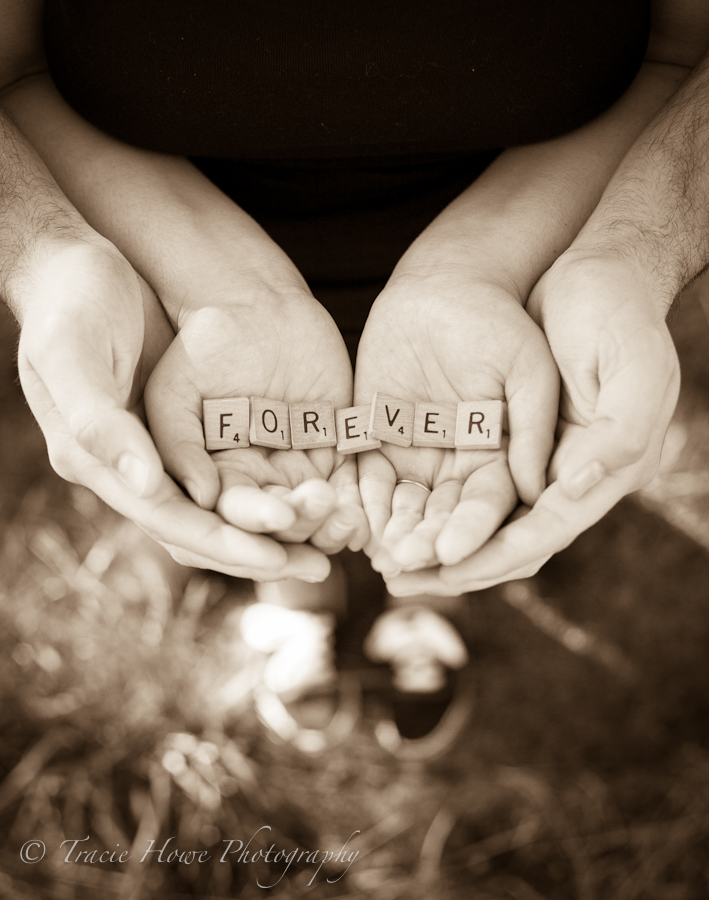
Alicia and Chris were SO much fun to work with during their engagement photo shoot at Discovery Park! And photogenic to boot! Alicia and I are following each other on Pinterest, so I had an idea of the types of shots she likes. I was super excited to work with her because I knew she would be up for a lot of creative, quirky, and energetic shots! My favorite! And Chris was such a trooper throughout the entire thing, smiling the whole time. What a guy she snagged!

Anyway, here are a bunch of our shots. Some of them are not original ideas of mine. Trust me, if I knew who’s they were, I would totally credit them! I played around with the sun a lot during this shoot, and I tried out some cool effects in post processing, so these are a little crazier than usual. I hope you enjoy them. I love how they turned out!

photo of Seattle engagement photography session - Discovery Parkpinimagephoto of Seattle engagement photography session - scrabble ideapinimagephoto of Seattle engagement photography session - Discovery Parkpinimagephoto of Seattle engagement photography session - legspinimagephoto of Seattle engagement photography kiss - Discovery Parkpinimagephoto of Seattle engagement photography session - Discovery Parkpinimagephoto of Seattle engagement photography session - bubblespinimagephoto of Seattle engagement photography session - Discovery Parkpinimagephoto of Seattle engagement photography session - feetpinimagephoto of Seattle engagement photography session - Discovery Parkpinimagephoto of Seattle engagement photography session - Discovery Parkpinimagephoto of Seattle engagement photography session - Discovery Parkpinimagephoto of Seattle engagement photography session - Discovery Parkpinimagephoto of Seattle engagement photography session - Discovery Parkpinimagephoto of Seattle engagement photography session - save the date ideapinimage


Congratulations you guys! For your upcoming wedding and for winning the shoot!

Share to FacebookPin Site ImageTweet This Post

Tuesday’s Tip #6:

Although I haven’t covered the fundamentals of photography here (yet! It’s a long one so I’m working up to it.), you’re probably aware that using a faster shutter speed helps capture moving objects. Basically, you’re trying to catch the object and stop it in motion.

But, what about using a slow shutter speed? If you are unfamiliar with this concept, you might be thinking that sometimes objects are moving too fast to capture with slow shutter speeds, so how does that work? Well, you pan. That’s an action folks! Panning is a technique that involves following the moving object with your camera. It can be tricky to master, but the effect is a blurred background, which conveys movement, and a sharp (or relatively sharp) moving object. It’s pretty cool. When I get my act together, I will include photos related to each tip, but for now maybe you can Google it!

Have any questions? Leave them in the comments below. Maybe I can answer your question in next week’s post. ๐Ÿ™‚

Share to FacebookPin Site ImageTweet This Post
  • May 26, 2013 - 3:57 am

    alfred - Thank for these tips. I will try it tomorrow.ReplyCancel

    • May 26, 2013 - 11:47 am

      traciehowe - You’re welcome! Thanks for commenting… it’s a reminder for me to add a photo to this post. ๐Ÿ™‚ReplyCancel


Tuesday’s Tip #5:ย 


Get in close! This can mean different things for different subjects, but it will often make an interesting photo no matter what.

For tiny things, getting in close means macro photography. Macro photography involves a whole world of challenges, but the first step is to use a macro lens that will allow you to focus close to an object. Ever notice that your camera has trouble focusing when you try to get right up next to your subject? That’s why. You need a macro lens, or even what’s called an extension tube. These are cheaper and will attach to your regular lens, but not always a better solution. I’ll talk more about macro photography in a later post. For now, just know that it is a super fun way to shoot! Google it and you will see!

For other subjects that aren’t so tiny, getting in close gives you a different perspective on things. Most people take wide, expansive shots of landscapes. Try zooming in, which is a way of getting close. Chances are, this will give you a unique take on a landscape that countless people have already photographed. While the two photos below weren’t taken from precisely the same spot (but close enough for this example), I personally like the closer view of the rocks better than yet another so-so landscape. Notice that I didn’t even take a wide shot of the exact landscape because it was interesting to me.

different perspectives of same landscapepinimage


Stepping forward or zooming into a portrait shot is also fun. You don’t have to include someone’s entire head in a photo, because you have what’s called artistic discretion! Although I have to remind myself to take these types of shots more often, I think they often make the best portraits! If you know your technical stuff, you can also play around with fuzzing out the background, which is a nice way to isolate the subject even more. This is true for macro photos as well.

The sky is the limit for what you can get close to or zoom in on. Seriously… you can only zoom into the sky so far before you need some kind of crazy telescopic equipment, and I’m guessing you don’t have any if you’re reading my photo tips. ๐Ÿ˜‰


Have any questions? Leave them in the comments below. Maybe I can answer your question in next week’s post. ๐Ÿ™‚

Share to FacebookPin Site ImageTweet This Post


Tuesday’s Tip #4:

This is a quick tip for any of you who have ever wondered how to shoot through a glass window. Press your lens up against the glass. What this accomplishes is an elimination of reflective glare from things like your clothes. If the lens is not allowing any other light in between it and the glass, it won’t see those nasty glares. This works for SLR cameras and point and shoots, just remember that you have to be careful if your lens moves while zooming or focusing! Sometimes you may want to shoot through a window of a bumpy car or vibrating plane, so this trick won’t work as well. In these cases, it’s best to wear something dark and cover up any other light, reflective surfaces so that there is less glare in the reflection. Check out this cool shot from inside Seattle’s Columbia tower.

View from Seattlepinimage

Another thing you may want to consider, is leaving the reflections in on purpose. This will be a creative decision on your part. ๐Ÿ™‚ Happy shooting!


Have any questions? Leave them in the comments below. Maybe I can answer your question in next week’s post. ๐Ÿ™‚

Share to FacebookPin Site ImageTweet This Post
K e e p   u p   w i t h   T H P